
Surprising fact: most losses blamed on “bad contracts” or phishing begin with a chain of small, preventable misjudgments inside the user’s browser wallet—choices the user can observe and, with the right tools, control. That sentence rewrites a common assumption: the wallet is a passive conduit and security is solely the vendor’s responsibility. In reality, modern browser wallets (extensions like Rabby Wallet) expose a working surface that sits between human intent and on-chain execution. Understanding where that surface creaks, and what transaction simulation can and cannot do, is the difference between routine safe use and an expensive lesson.
This piece unpacks the mechanics and mythologies around browser wallet security for American DeFi users who discover Rabby Wallet through archived resources and are considering it for multi-chain access. I focus on three things: how browser wallets mediate transactions; what transaction simulation is (and what it realistically prevents); and the practical trade-offs of different defensive patterns. The aim is not to endorse a product but to give you a clearer mental model and decision framework you can use when choosing and using a wallet.
How browser wallets sit in the stack — and why that matters
Browser wallets are an interface layer: they hold keys locally, construct transactions, and act as an RPC client that forwards signed transactions to a node. That architecture sounds simple, but security problems arise because the extension sits between three distinct trust zones: the user (human intent), the web page (dApp), and the blockchain (execution environment). Each handoff is an opportunity for mismatch.
Key points of failure:
– Permission and approval UI: The wallet must translate complex state changes (token approvals, contract calls) into a short popup. Abbreviation and poor framing can hide critical behaviors like unlimited approvals or batched operations that move funds across chains.
– Network and RPC selection: If a dApp or attacker points you at a malicious RPC, the simulation and gas estimates may be manipulated, causing confusing confirmations or failed transactions that leak metadata.
– Signing context: The wallet must bind what you see (a human-readable summary) to what will be executed on-chain. Any ambiguity in that binding invites social-engineering attacks.
These are not abstract risks. They are why a wallet’s UX, simulation capabilities, and how it surfaces raw transaction data are as relevant to safety as seed management. The vendor-level promise—simple, fast, secure—matters, but users must know which trade-offs are being made under that slogan.
What transaction simulation actually does (and what it doesn’t)
Transaction simulation replays a proposed transaction against a read-only node to predict effects: will it succeed, what state changes will occur, and how much gas will be used. It can show token balances after execution, internal token transfers, or failed require checks. This is powerful, but its preventive power is limited by concrete constraints.
Established capability: simulation is excellent at detecting immediate execution failures, showing visible token transfers, and estimating gas. If a malicious dApp constructs a call that will revert or burn tokens in a predictable, atomic way, a good simulator will flag it.
Important limitations:
– Off-chain or asynchronous effects: Simulations can’t read secrets that a contract might rely on from an oracle or cross-chain relayer that will be different in the live environment. They also cannot see future governance actions or off-chain instruction sets that will be present at execution time.
– State-dependent logic: If a contract’s behavior depends on other transactions that will race to the chain between simulation and execution, the simulator’s snapshot may be misleading. Front-running, MEV (miner/extractor value) manipulations, and race conditions are not prevented by simulation.
– Malicious approvals and encoded payloads: Simulation will show token transfer events, but it may not raise an obvious alarm for an “approve unlimited” call—unless the UI highlights that consequence. The simulator sees the internal transfer only if the approval is used within the same transaction; it cannot predict future uses.
Practical implication: simulation reduces uncertainty but does not eliminate attacker leverage. It is a diagnostic, not a proof of safety. Use it to answer “will this transaction behave as I expect right now?” not “is this counterparty trustworthy forever?”
Common myths, corrected
Myth: “If the wallet simulates successfully, the transaction is safe.” Correction: Simulation confirms a snapshot outcome; it cannot reveal future authorization abuse, off-chain collusion, or privileged upgrade paths inside a contract.
Myth: “Extensions are inherently unsafe; hardware wallets are the only secure option.” Correction: Hardware wallets reduce attack surface for key extraction but do not eliminate UX or approval problems. A hardware wallet can still sign an encoded payload that grants unlimited approval if the device’s signature prompt is insufficiently informative.
Myth: “Approved once means nothing will happen until I sign again.” Correction: Token approvals are persistent authorizations. A single unchecked “approve unlimited” can permit repeated drains without further user interaction.
Decision framework: three heuristics for safer browser-wallet use
Here are three reusable rules that combine mechanism and practice.
1) Treat approvals as delegation: never give unlimited approvals unless you accept continuous risk. Prefer per-amount approvals and use a revocation checklist regularly.
2) Read the raw payload when stakes justify it: simulation and UI summaries are helpful, but when value is material, inspect the contract call data or use a transaction builder that shows decoded function names and parameters.
3) Use simulation as early warning, not final arbiter: if simulation flags unusual internal calls or token movements, pause. If it passes, still consider other signals (contract source verification, recent audits, community chatter, and whether an upgradeable proxy is involved).
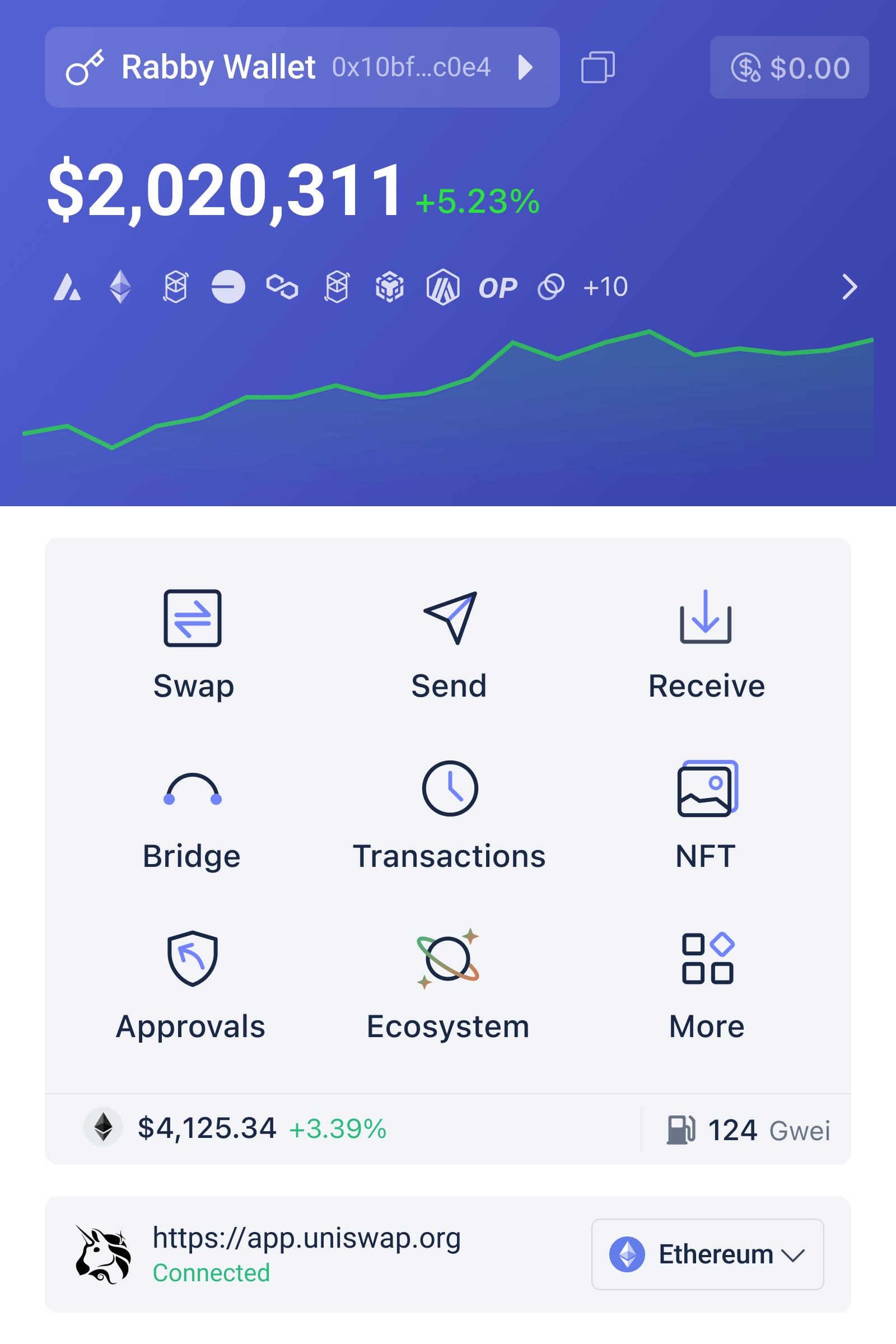
If you are exploring Rabby Wallet specifically, archived installation and documentation can be helpful to check design choices and UI screenshots before installing. For convenience and for an archived official installer or PDF overview, see this resource: https://ia902901.us.archive.org/26/items/rabby-wallet-official-download-wallet-extension/rabby-wallet.pdf.
Trade-offs and what users in the US should weigh
Speed vs. scrutiny: Browser wallets aim for frictionless UX. That lowers cognitive load but compresses important decisions into a few lines. In the US context—where many users access many centralized and decentralized services from the same machine—the convenience of an extension must be balanced with compartmentalization strategies (separate browser profiles, dedicated devices, or hardware-backed keys).
Centralization vs. privacy: Using a public RPC or a wallet’s default node may route metadata that ties your browsing profile to blockchain activity. Running your own node reduces that exposure but increases complexity. Decide which threat model (privacy leak vs. ease of use) you prioritize.
Automation vs. control: Features like auto gas adjustment, “one-click” contract interactions, or bundled transaction flows are helpful for DeFi. But every automated convenience is an additional control point an attacker can manipulate. The correct choice depends on the value at risk and your operational discipline.
What breaks in practice — and a few unresolved issues
Two persistent problems remain partially unsolved by current wallet and dApp ecosystems: standardized, readable descriptions for arbitrary contract calls; and economically robust ways to manage long-lived token approvals. Current workarounds—human-readable decoding, better UI heuristics, and third-party revocation services—reduce risk but do not eliminate it. Expect incremental improvements rather than a single fix.
Another challenge is the arms race around UX spoofing. As wallets strive to simplify approvals, attackers engineer prompts that look legitimate. The only durable defenses are layered: better vendor UI design, user education, and operational separation of accounts.
What to watch next (conditional signals)
If wallet vendors continue to market “one-click” convenience as their differentiator, expect two opposing developments: richer simulation features (more detailed internal traces, richer pre-execution alerts) and more aggressive UX compression (which risks masking crucial details). A positive signal would be standardized, machine-verifiable transaction summaries and wider adoption of “approval allowances” instead of unlimited grants. A negative signal would be defaulting to unlimited approvals or non-transparent gas/payment flows.
Regulatory shifts in the US—especially around custody, consumer disclosures, or digital-asset fraud rules—could change vendor incentives, pushing wallets towards stronger default safety features. That is plausible but contingent on specific rules and enforcement priorities.
FAQ
Q: Will transaction simulation stop phishing and social-engineering scams?
A: No. Simulation helps detect certain technical failures and immediate state changes, but phishing and social engineering exploit human trust, ambiguous prompts, and persistent approvals. Use simulation as one check among many: verify URLs, inspect decoded calldata when possible, and avoid blanket approvals.
Q: Should I always use a hardware wallet instead of a browser extension?
A: Hardware wallets reduce the risk of private key extraction but do not remove all risks. They do not automatically provide clearer transaction semantics or limit approvals. For higher-value holdings, a hardware wallet combined with careful UI checks and conservative approval habits is a stronger posture.
Q: How often should I revoke token approvals?
A: There’s no universal schedule. For frequently used dApps with low-dollar activity, weekly or monthly checks are reasonable. For large-value approvals, revoke immediately after the operation. Automated revocation tools can help, but they require their own trust assessment.
Q: Can I trust archived installer PDFs and screenshots when deciding to install a wallet?
A: Archived documentation is useful for assessing a wallet’s claimed features and UI evolution, but installers and extensions on your machine must be fetched from trusted sources. Use the archive to research, then verify the current vendor source, signatures, and community reputation before installing.
