
We also offer trading strategy and news articles for all experience levels – so whether you’re a complete newcomer or a seasoned hand, we’ve got something for you. Say, for example, that you buy 5 contracts when the asset buy price is 7500. A single contract is equal to a $10 per point, so for each point of upward movement you’d make $50 and for each point of downward movement you would lose $50 (5 contracts multiplied by $10).
Leverage in CFD trading explained
Trading Contracts for Difference (CFDs) carries significant risk and may not be suitable for all investors. Strategies outlined here are based on hypothetical historical data and market conditions. However, trading CFDs is inherently uncertain, and there’s no universal strategy for success. Markets can change rapidly, and past performance doesn’t guarantee future results. Bitcoin CFD trading means taking a position in the digital currency, depending on your prediction of the future movement in the cryptocurrency’s price. Bitcoin CFD trading allows a trader to speculate on the price of the crypto and take a long or a short position, accordingly.
Leverage is what makes forex trading appealing because it enables traders to open larger positions than what they can afford with their own money which increases the potential for huge returns. In the U.S., CFDs are banned so U.S. retail forex traders trade a product known as “rolling spot FX contracts“. From a technical standpoint, they’re considered different from CFDs, but from a functional standpoint, they are the same. Both are cash-settled contracts in a particular currency pair that gives you exposure to changes in the price for that currency pair. CFDs are settled with cash, but the notional amount is never physically exchanged.
What is CFD trading? Definition, Risks, Pros & Cons
Leverage boosts the stakes, making trading a high-risk, high-reward proposition. Leverage is a strategy used by expert traders to increase the return on their capital by increasing price movements by a particular factor. When markets are rising, a trader will open a long position in the hopes of seeing the price rise. The trade can be closed and profit booked if it reaches the intended resistance or profit. Let’s assume that you expect Tesla’s share price to decline, so you decide to open a short position by selling 10 shares of Tesla via CFDs at $428 each.
Out-of-hours shares

This means that you can benefit not only when the market rises in price (goes long), but also when it falls in price (goes short). If the market turns around, you’ll be able to close the deal in profit rather than at a loss. The win-to-loss ratio and total profit or loss will eventually determine whether or not a trader is profitable. Get the tools you need to trade with confidence, including the latest TradingView charts, timely market insights and updates from Newsquawk, and more. With CFD trading, you can short-sell the market in order to hedge against this downtrend possibility.
You’ll open a leveraged position with margin
- 50% of retail investor accounts lose money when trading CFDs with this provider.
- Every trade put on by an individual is an agreement between the individual and the broker they are using.
- When you sell short, rather than go long on a CFD position, you will profit if the price of the underlying asset falls.
- This way, we can ensure you get the best trading experience possible.
- CFD trading democratises the markets by providing a low entry level.
- It is a potentially high-risk trading strategy, but as long as you understand how CFD trading works, you can minimize your risk exposure.
You believe that Apple stock will decrease in value, and you want to profit from this movement. To do this, you can open a short CFD position (known as short-selling) and profit from a is everestex exchange legit tanking market. This time, you have decided to sell 100 CFDs on Apple at $170 per share, which then proceeds to fall to $160 per share.
CFDs vs Stocks: What is the Difference?
The spread size varies depending on factors such as the volatility and liquidity of the financial instrument. Their total cost is $200 (100 units × $2.00), though he doesn’t put down the full amount. CFDs are leveraged products, so he only puts down a small portion of the total value of the trade. CFDs replicate the behavior of financial markets, allowing you to buy and sell them similarly to the underlying assets they represent. It is important to note that any profits and losses will be calculated according to the total size of your position, not the capital invested.
Access the power of
Slippage can happen in both directions, resulting in a more favorable or less favorable price for the trader. While slippage cannot always be avoided, traders can mitigate its impact using limit orders. In this section, we’ll go into the fundamental basics of CFD trading. Knowing the basics is essential and will help you understand the necessary terms you’ll find on platforms and later on in this guide. In this guide, we’ll provide straightforward explanations and practical tips to help newcomers understand the basics of Contracts for Differences (CFDs) trading. Whether you’re just starting or looking to refine your trading skills, our aim is to help give you the essential knowledge needed to trade CFDs effectively.
Outcome A: winning trade
Nevertheless, some CFD brokers may still charge commissions in addition to the spread for certain types of trades or for access to specific markets. These commissions are usually charged as a percentage of the trade’s value or as a fixed fee per trade. Charts serve as visual representations of price movements of financial assets over specified time periods. Traders utilize chart analysis, also known as technical analysis, as a fundamental tool for identifying trends, patterns, and lucrative trading opportunities. Instead of purchasing the stock directly, you open a CFD position with your broker.
Stocks
Shares are more accessible when trading OTC using derivatives like CFDs (compared to directly on a centralised exchange). When there are more buyers than sellers in the market, demand is greater, and the price goes up. If there are more sellers than buyers in the market, demand is reduced, and the price goes down. These entities stand to profit from supply and demand of goods or products, political instability, the availability of currency (including the movement of interest rates), and many other factors. An additional feature is 24/5 customer support, aligned with the trading week, according to the platform.
Example 3: Trading Crypto CFDs (Bitcoin)
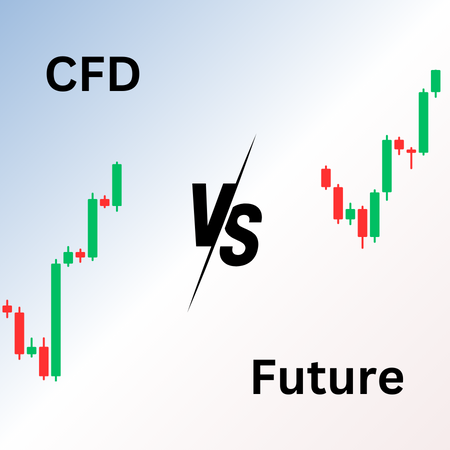
CFD trading is defined as ‘the buying and selling of CFDs’, with CFD meaning ‘contract for difference’ as explained above. A CFD is a derivative product because it enables you to speculate on financial markets such as shares, forex, indices, and commodities without having to take ownership of the underlying assets. CFD trading is the method of speculating on the underlying price of an asset – like shares, indices, commodities, cryptos, forex and more – on a trading platform like ours. A CFD – short for ‘contract for difference’ – is the type of derivative that enables you to trade the price movements of these financial markets with us. Please ensure you understand how this product works and whether you can afford to take the high risk of losing money.
